Drakrom
Gold · 1 Drakrom
The sovereign coin. A full piece settles a lord’s obligation, secures a caravan’s passage, or gives a contract the force of a witnessed oath.
Of Fealty and Fire · Realm Codex
The measure carried by crowns, caravans, and oaths
The realm’s gold standard is not merely currency. A whole Drakrom is a sworn weight: proof of authority in a noble’s coffer, passage through a mountain gate, and value recognized wherever the dragon’s chain is feared.
The realm’s accepted measure
Trade from the lowland markets to the Emberveil passes is counted in three linked denominations. The metal matters, but the stamped weight and accepted face matter more: every innkeeper, caravan-master, tax collector, and fence knows the count.
The Drakrom is the high measure: gold reserved for land grants, military contracts, dowries, tribute, and the tolls of powers too entrenched to bargain. Its lesser companions keep ordinary life moving.
A Talon is the silver coin of wages and wholesale trade. A Scale is the copper count of meals, lamp oil, ferry fares, and market change. Prices differ by region, but their exchange is fixed by charter.
“One coin, one weight. The crown is not divided.”
| Coin | Metal | Accepted value |
|---|---|---|
| Drakrom | High-karat gold | 1 Drakrom = 10 Talons |
| Talon | .880 fine silver | 1 Talon = 12 Scales |
| Scale | Copper or billon | 120 Scales = 1 Drakrom |
Gold · 1 Drakrom
The sovereign coin. A full piece settles a lord’s obligation, secures a caravan’s passage, or gives a contract the force of a witnessed oath.
Silver · 1/10 Drakrom
The working coin of the realm. Talons pay soldiers, buy freight, and pass hand to hand at tavern tables, guild halls, and shrine steps.
Copper · 1/12 Talon
The small count for daily trade. Scales fill purses quickly, which is why every market ward has its own stories about shaved edges and false strikes.
Coins take on local meanings
The chartered exchange is consistent, but no coin travels without acquiring a local reputation. In the realm’s borderlands, a purse can open gates, earn a blessing, or reveal its owner as an easy mark.
The Chain-Road through Kravec Pass accepts whole Drakroms only. Talons are refused, barter is ignored, and any gold piece that fails the Warden’s Weight is chisel-marked before it is handed back. For mountain lords, a coin fit for the pass is worth more than its gold.
The shrine-order mints devotional Talons of purer silver than the crown’s common issue. Pilgrims buy them at a small offering premium, merchants accept them gladly, and households hide them in dowry chests rather than spend a blessing twice.
In the black-market alleys beneath the old river wards, Scale coinage is distrusted. Fences count copper by sound, bite suspicious edges, and quote serious prices in Talons. A clean Drakrom can purchase silence, but it also announces that someone important has entered the dark.
The marks that make the weight speak
A moneylender reads a Drakrom with the thumb before trusting it to the scale. Its weight, its edge, its recessed inscription, and its relief all testify to whether the gold belongs in a strongbox or a furnace.
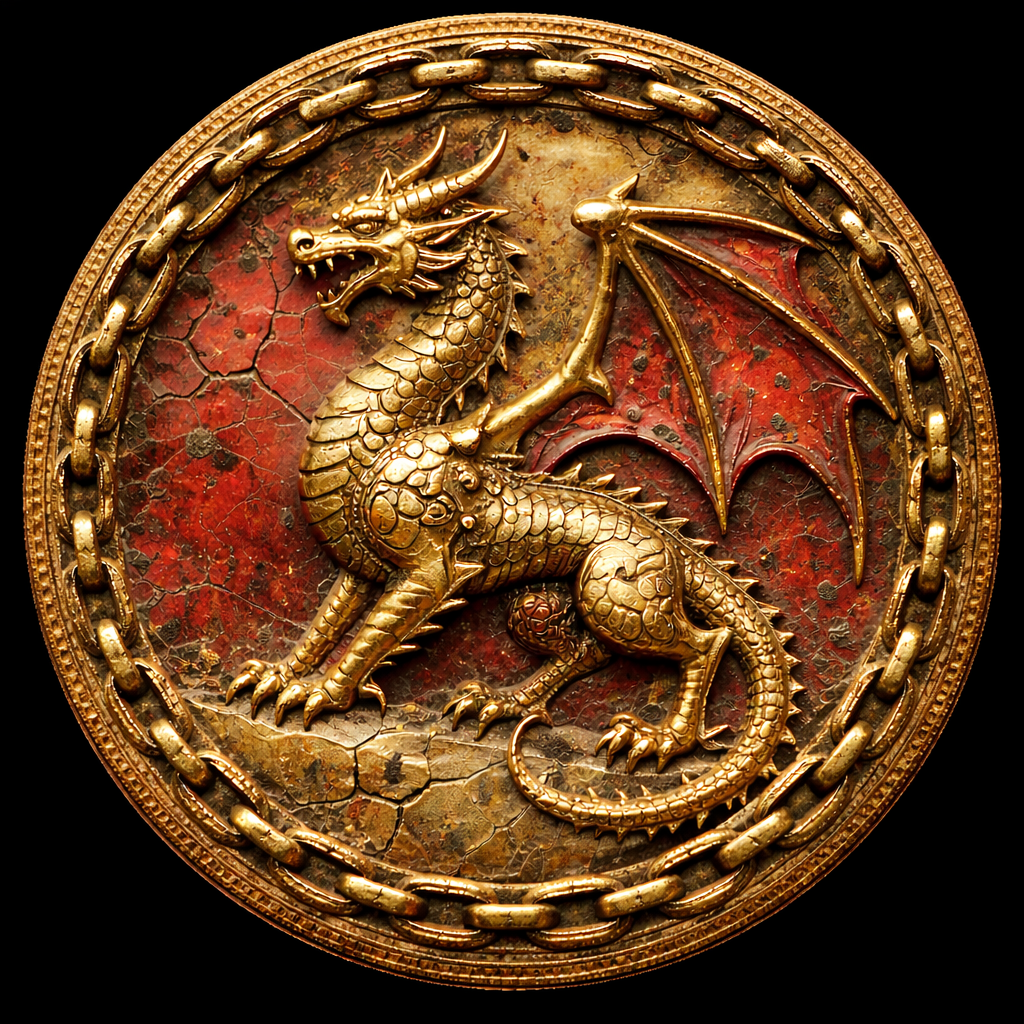
The obverse bears a left-facing dragon in high relief, its spine and scales chased finely enough to catch torchlight one ridge at a time. Its wings hold violet enamel in recessed channels, dark at the ribs and amethyst at the thin edges.
Copper-oxide wash burns warm along the talons and crest. The dragon does not need a crown above its head: the heavy interlocking chain around the rim supplies one, binding beast, gold, and law into the same unbroken circle.
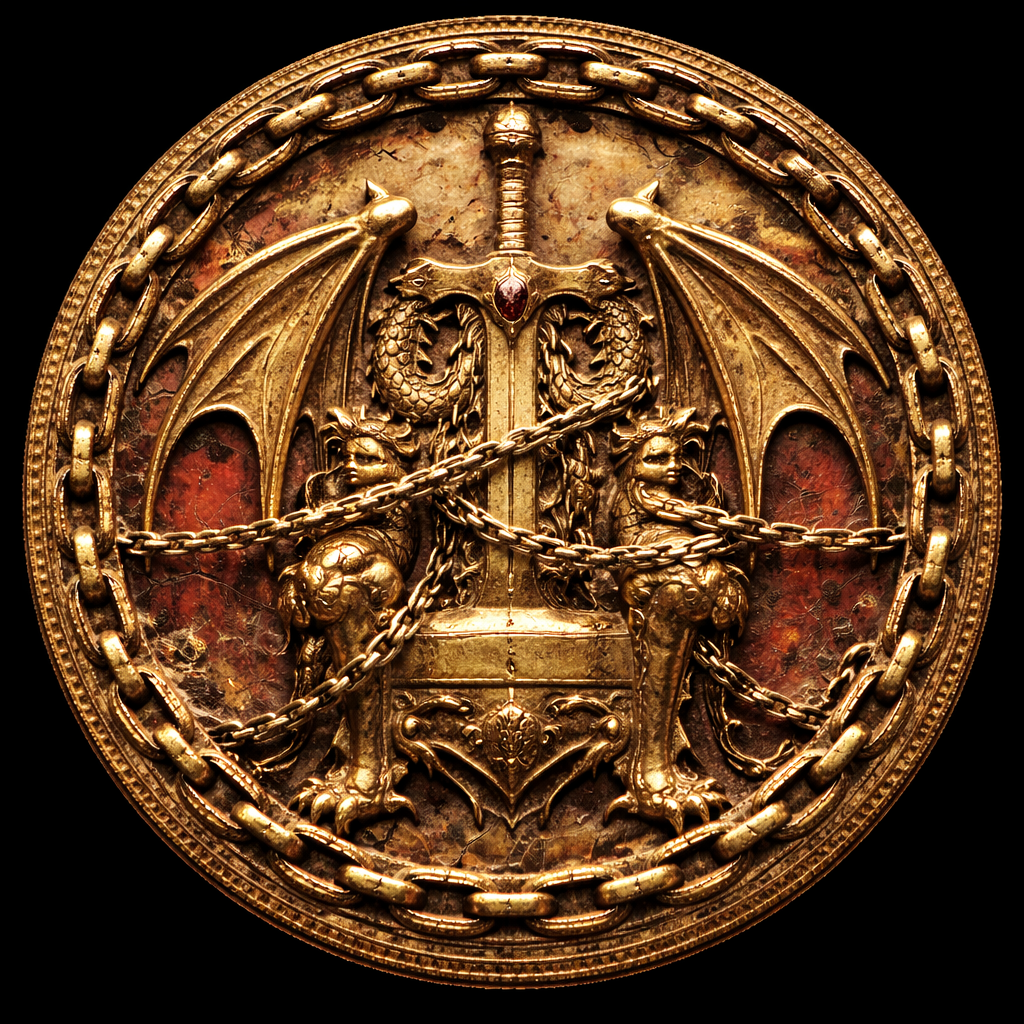
The reverse answers the dragon with a vertical sword of covenant. Its blade rises from the field in sharp relief, framed by inward-facing winged guardians and the same chain that closes the obverse around the dragon.
At the crossguard lies a cavity filled with granular ruby paste. Traders say the red is easiest to see in rain; soldiers say it brightens only when the coin has been paid for blood. Neither claim changes the price, but both make a counterfeiter’s work harder.
Mint reference
Both faces carry the same visual argument: old gold made sovereign by chain, oath, and the authority to set a weight that the realm must honor.
The recessed legend
Dra names the warden-beast; Kro names the binding crown and oath; Ma names the counted measure. Together they establish the Drakrom as a dragon-sanctioned standard of value — a promise cut beneath the coin’s visible power, where only a careful hand will find it.